Afield · March 18, 2026
Balloon Mornings: Photographing Dawn Ascensions in the Rio Grande Valley
Every October my city fills with balloons, and every October I relearn the same lesson: the picture happens before sunrise, not after. Here is how I work a launch field, from the first burner test to the quiet after everyone leaves.
 By June “Goose” Aldaco · 6 min read
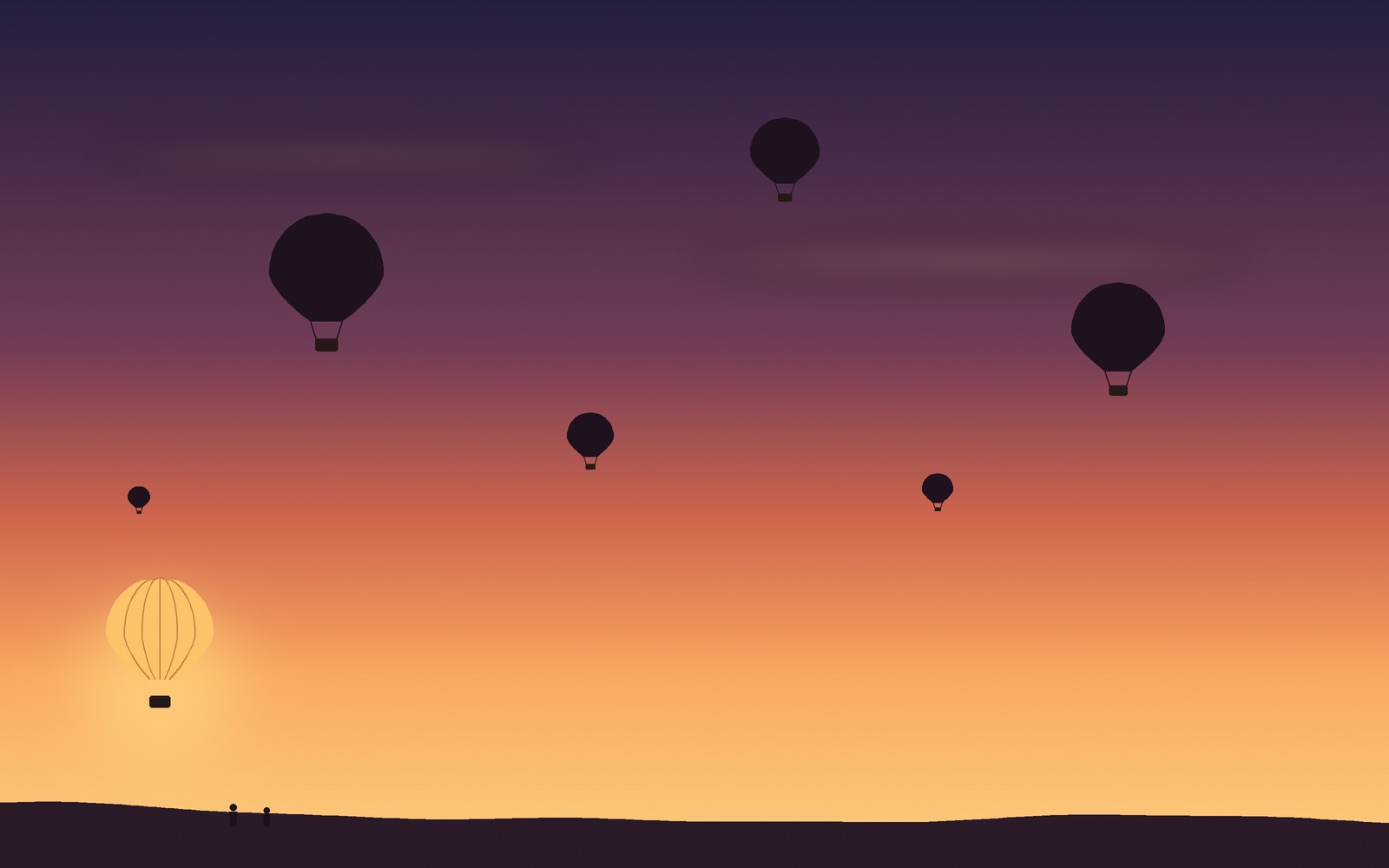
I live in a city that fills with balloons every October, and I have stopped pretending I will sleep in that week. Smaller launches happen here year-round — a Saturday club flight from a dirt lot, three envelopes and a thermos — but the principle is the same at any scale. If you want the photograph, you get up in the dark. The balloons will not wait for you, because they cannot.
Why balloons fly at first light
Balloons are creatures of stable air. A pilot needs light, predictable wind to inflate a fragile envelope the size of a small building and then steer it with nothing but altitude changes. That air exists reliably in one window: the hour or two around dawn, before the sun heats the ground and the atmosphere starts to churn. By mid-morning, thermals make inflation risky and landing worse, so the whole spectacle compresses itself into first light.
My valley adds a gift on top of that. On calm mornings, cool air drains south along the river near the surface while winds a few hundred feet up run the other way. Pilots call it the box: launch, drift one direction, climb, drift back. For a photographer this means the balloons return. You can plant yourself, watch a balloon sail away, and wait for it to come home over your head at a different altitude. Almost nowhere else does the subject reload itself.
The practical consequence: check the forecast the night before, arrive at least an hour before official sunrise, and treat the schedule as weather-dependent, because it is. I have driven out in the dark to watch a launch get scrubbed by a six-knot breeze. Bring coffee. Scrubbed mornings still have good skies.
The inflation glow
The best light of the entire morning happens while it is still, technically, night. Crews lay the envelopes out flat, cold-inflate them with fans, and then stand the balloons up with long pulls of the burner. Each burn turns the envelope into a giant paper lantern — nylon lit from inside, ribs and gores suddenly visible, crew silhouetted against the skin.
Expose for the flame, not the scene. Your meter will see a dark field and try to lift everything, blowing the glow into a white smear. I dial in two or three stops under what the meter suggests, check the histogram, and let the field fall to near-black. The burn itself lasts a few seconds; the glow decays fast. I shoot in short bursts timed to the burner's roar — you hear it a beat before the envelope brightens, which is all the warning you need.
Keep the ISO honest but not fearful. A little noise in a deep blue sky reads as texture; a blurred flame reads as a mistake. I stay handheld here, around 1/125 or faster, and I move constantly, because the geometry of a half-inflated envelope changes by the second. The moment the balloon rounds out and stands, that particular picture is gone.
Mass ascension: pick one
When dozens or hundreds of balloons launch at once, the instinct is to shoot everything, wide, gulping. Those frames almost always disappoint. A sky full of balloons photographs like confetti — abundant and shapeless.
My rule now: pick one. Find a balloon with a clean color or an odd shape, and stay with it through its whole arc — layout, cold inflation, stand-up, the pilot's last check, the moment the basket goes light on the grass. You get a story instead of an inventory, and the other ninety-nine balloons become your background, which is a background no one can rent.
Then, once your subject is airborne, switch problems. Put on the longest lens you carry and compress. A 200mm equivalent stacks envelopes that are actually half a mile apart into one dense wall of color; the sky disappears and the frame becomes pure pattern. This is the shot the eye cannot see — our depth perception undoes it in person — which is exactly why it works on a flat page.
And shoot into the sun. Everyone turns their back to it for the postcard; turn around. Backlit envelopes go translucent, you can see the vertical load tapes through the fabric like veins in a leaf, and rim light draws every balloon out of the haze. Meter for the bright fabric, accept the flare or hide the sun's disc behind an envelope, and let the foreground crowd fall to silhouette. Those silhouettes — kids on shoulders, a dog straining at a leash — are the frame's scale and its warmth.
Courtesy on the launch field
At the big October event, spectators walk the field among the balloons, which is a privilege that survives on manners. The rules are simple and I have watched people break every one of them for a picture. Never step on the envelope or the lines — nylon is fabric, and crown lines under tension can move fast. Give the crew room during inflation; they are doing physical, time-critical work. Ask before you get close, and you will usually be waved in closer than you expected — crews are proud of their balloons and glad someone is paying attention to the craft rather than just the color.
Watch behind you. The most common launch-field injury I have witnessed is one photographer backing into another. Look up from the viewfinder every few frames; the field rearranges itself constantly, and a basket dragging on a breezy takeoff does not care about your composition.
The quiet fifteen minutes
Here is the part almost everyone misses. When the last balloon lifts and the crowd streams toward the parking lots, stay. The field empties, and for about fifteen minutes it belongs to the leftovers: a crew folding an envelope into its bag like a bedsheet, propane tanks in a row catching the now-risen sun, flattened grass in enormous ovals, one child asleep on a cooler. The sky still has balloons in it, small now, ornaments over the mountains.
The light is ordinary by then and the pictures are better for it. The spectacle photographs itself; the aftermath needs a photographer. Most Octobers, my favorite frame of the week comes from those minutes — some year it is a gloved hand smoothing fabric, some year it is just the empty field steaming. I stand there with cold feet and a full card, and I am always glad I did not follow the crowd out.
Source notes
Facts in this essay were checked against the following public resources (search the titles to find them):
- Federal Aviation Administration, "Balloon Flying Handbook"
- National Weather Service, "Albuquerque Forecast Office"
- U.S. Naval Observatory, "Astronomical Applications: Sun and Moon Data"